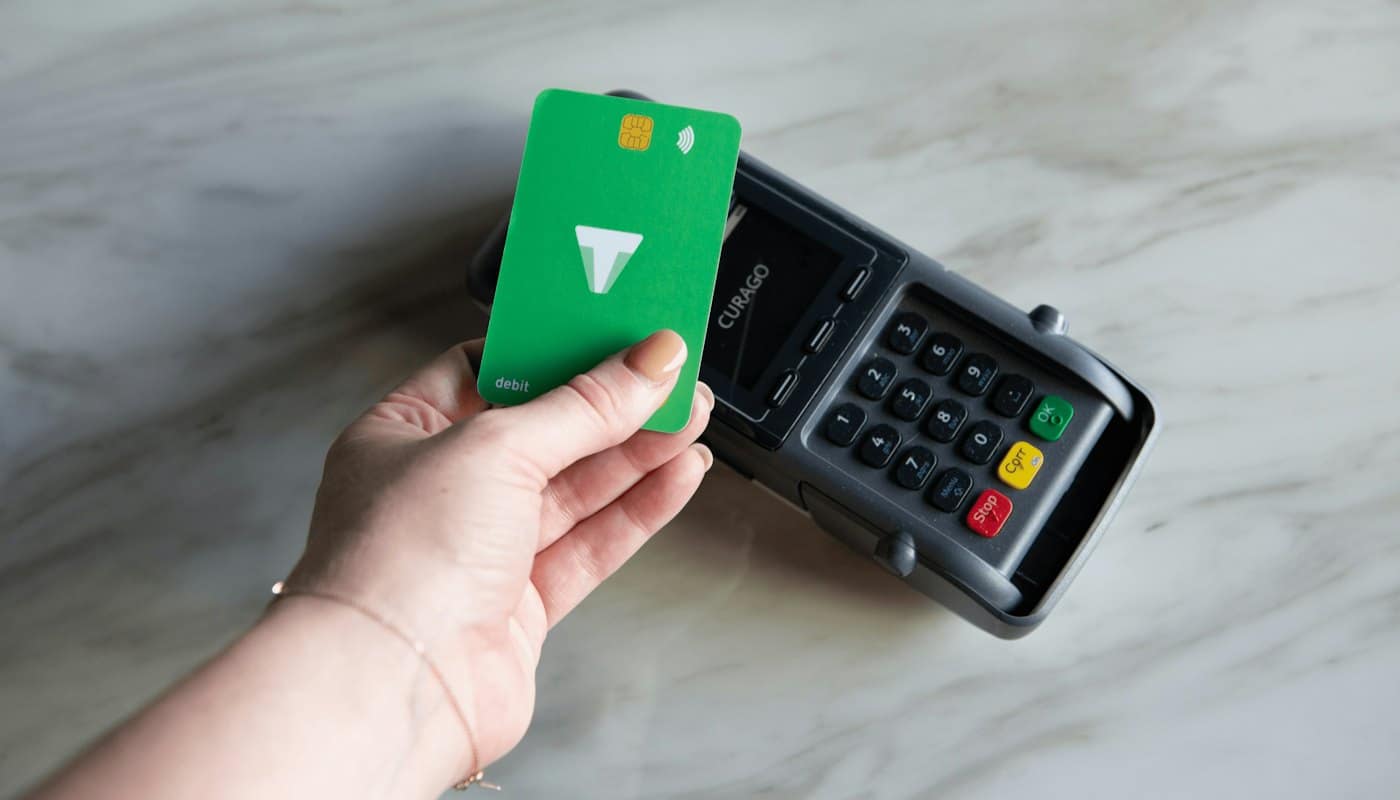
Buy now, pay later (BNPL) lets you take a purchase home now and repay it in a handful of installments, usually without interest. Whether it affects your credit depends on the lender, the type of plan and the country, and this article describes both the United States, where the Consumer Financial Protection Bureau (CFPB) is the main federal voice, and the United Kingdom, where the Financial Conduct Authority (FCA) now regulates the product.
How does buy now, pay later work in practice?
According to the CFPB, a BNPL loan is a type of installment loan that lets you buy something right away with little or no upfront payment, then repay the balance in four or fewer payments. The option usually appears at online or app checkout, and sometimes in stores. A common plan, the CFPB says, splits the cost into four interest-free payments made every two weeks, with the first due at checkout or two weeks later.
The CFPB describes typical eligibility in the US as being at least 18, having a mobile phone number, and holding a debit card, credit card or bank account from which payments can be taken. The loan is usually tied to a single purchase, not to a reusable credit line. That distinction matters for credit files, as the next sections explain.
The CFPB’s research uses the term “pay-in-four” for zero-interest loans repaid in four or fewer installments. Its January 2025 report on consumer use of BNPL looked at applications and originations from six firms: Affirm, Afterpay, Klarna, PayPal, Sezzle and Zip.
A worked example of a pay-in-four plan
The arithmetic below is illustrative, not a quote from any provider.
| Item | Amount |
|---|---|
| Purchase price | $200.00 |
| Payment at checkout (1 of 4) | $50.00 |
| Payments two, three and four (every two weeks) | $50.00 each |
| Total repaid if every payment is on time | $200.00 |
| Hypothetical late fee on one missed payment | $7.00 |
| Total if one payment is late | $207.00 |
Four payments of $50 add up to $200, so an on-time plan costs nothing extra. The cost appears only when something goes wrong. The $7 fee is an invented figure for illustration, because each lender sets its own fees. The CFPB notes that many BNPL loans do not charge interest, but most charge late fees.
Where does the lender make its money?
Because the customer often pays no interest, the revenue has to come from somewhere else. The CFPB’s consumer guidance points to late fees as one source. The existing Finance Treat explainer on how buy-now-pay-later changed spending habits covers the merchant-fee side, in which retailers pay for the checkout option. The practical point for consumers is that a plan that costs nothing when managed perfectly can become more expensive after one slip.
Does buy now, pay later affect your credit in the US?
It can, but often it does not. The CFPB states that, unlike a credit card, your creditworthiness may be evaluated each time you make a BNPL purchase. It adds that most BNPL loans do not involve a hard credit inquiry, though longer-term online installment loans usually do.
On reporting, the CFPB’s guidance says longer-term installment loans report your payment history to credit reporting companies, while BNPL payment history may not be reported. Its January 2025 research page makes the same point: lenders have typically not reported BNPL loans to the nationwide consumer reporting companies, so the loans rarely appeared in credit records in volumes large enough to measure key statistics.
Two consequences follow:
- On-time payments may not build your file. If the lender does not report, a perfect repayment record may not help your score.
- Problems can still reach your file indirectly. The CFPB says missed or late payments that are reported to credit bureaus may hurt your credit history and scores, and unpaid loans may be sent to a debt collector.
For background on what drives a US score, see Finance Treat’s guide to how US credit scores are calculated.
What changed in the UK on 15 July 2026?
Until recently, most UK BNPL sat outside financial regulation. According to the FCA, from 15 July 2026 it regulates what it calls Deferred Payment Credit (DPC), the interest-free product commonly known as BNPL. The FCA published its final rules in policy statement PS26/1 on 11 February 2026.
The FCA defines DPC as an interest-free credit product repayable in 12 or fewer installments over 12 months or less. The key scope points are:
- DPC is regulated when the lender and the supplier of the goods or services are different businesses.
- It is not regulated when the same business supplies the goods and provides the credit, and credit broking of DPC agreements is not regulated.
- Agreements taken out before 15 July 2026 remain unregulated, so the new protections do not apply to them.
- Lenders must be FCA-authorized or be in the FCA’s temporary permissions regime to keep offering DPC.
For agreements made from that date, the FCA says lenders must check that you can afford to repay before you borrow, give you key information first (including the amount, repayment timing and amounts, the late fee, and your rights), contact you if you miss a repayment, and support you if you are struggling to repay.
What protections do UK borrowers now get?
Beyond affordability checks and pre-contract information, the FCA says that if something goes wrong with a purchase made using DPC, you may be able to get a refund from the lender under Section 75 of the Consumer Credit Act. If you have a complaint, you should first raise it with the lender, and if you are unhappy with the response you can take it to the Financial Ombudsman Service.
The FCA’s consumer page does not address how DPC is reported to credit reference agencies, so this article makes no claim about it. UK readers can find the general picture in Finance Treat’s explainer on how UK credit reports and scores work. Borrowers can also check whether a lender is authorized using the FCA’s Firm Checker, and where a lender is not authorized, whether it appears on the FCA’s list of firms in the temporary permissions regime.
How does US regulation compare?
In the US the picture is less settled. The CFPB published an interpretive rule, “Use of Digital User Accounts to Access Buy Now, Pay Later Loans,” under the Truth in Lending Act’s Regulation Z, in the Federal Register on May 31, 2024. On May 6, 2025, the CFPB announced that it would not prioritize enforcement actions based on that rule and that it was “further contemplating taking appropriate action to rescind” it, saying it would focus resources on more pressing threats to consumers, particularly servicemembers and veterans.
The status of that rule may have changed since, so US readers should check the CFPB’s current position instead of assuming the 2024 protections apply. What does not depend on the rule is the practical guidance: read the terms, understand the late fees, and expect that reporting practices vary.
Common mistakes and misconceptions
- “Interest-free means free.” Late fees can apply, and a failed automatic payment can trigger bank charges. The CFPB says your bank may charge an overdraft or non-sufficient-funds fee when funds are short.
- “It never shows up anywhere.” Reporting may vary, and the CFPB says you could be blocked from new BNPL purchases until you catch up, or the debt could go to a collector.
- “Each plan is small, so the total is small.” Plans from different providers run on separate schedules. Adding every open plan together, as with any other debt, shows the real monthly commitment.
- “The UK rules apply to every plan.” They apply to agreements from 15 July 2026 where the lender and seller are separate businesses. Earlier agreements and merchants’ own in-house plans fall outside them.
Reading the fine print before you click
The same product can carry different consequences on either side of the Atlantic, and even between lenders in the same country. Before accepting a plan, check the number of payments, the late fee, how payments are collected, whether the lender reports to credit bureaus, and, in the UK, whether the lender is authorized. The rules described here reflect the position as of November 2026 and may change.
This article is general information, not personalized financial advice; rules and rates change.
Sources: Consumer Financial Protection Bureau; Financial Conduct Authority